Voice Comparators: Reliable or Not in 2026?
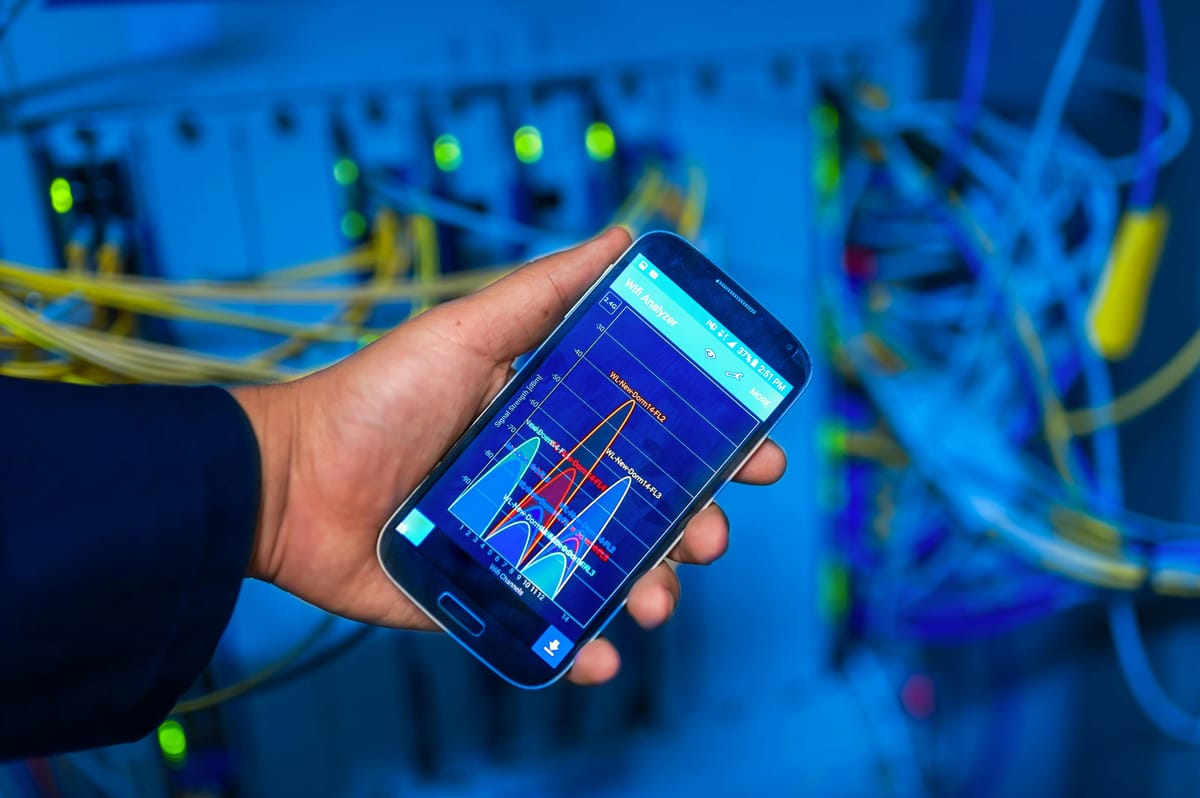
Voice comparators — also called voice biometrics or speaker recognition systems — analyze the acoustic characteristics of a recording to determine whether two voices come from the same person. These systems are currently used in banking security, call centers, digital authentication, and certain judicial investigations.
Under ideal conditions, modern technologies can achieve 95 to 98% accuracy, especially when the recording is clear and made in a controlled environment.
The algorithms analyze dozens of acoustic parameters such as fundamental frequency, formants, respiratory dynamics, or the spectral structure of the voice.
But this accuracy depends heavily on context. The human voice is a unstable and variable biometric: it changes with age, emotion, fatigue, illness, or sound environment.
Even one person can produce significant variations between two sentences spoken minutes apart.
Researchers measure the reliability of these systems with an indicator called EER (Equal Error Rate), which represents the error rate at which the system confuses two speakers or rejects an authentic speaker. In some experimental systems, this rate can still reach 7% to 9%, which remains significant for sensitive applications.
The arrival of voice deepfakes and voice cloning by AI further complicates the situation. Recent studies show that certain synthetic voices can fool existing voice authentication systems, especially when AI models are trained on small voice samples.
In practice, the majority of experts today considers that voice biometrics should not be used alone to prove identity. It is generally combined with other factors: password, smartphone, facial biometrics, or identity document.
In other words, in 2026, voice comparators are very useful but not infallible. They make it possible to estimate the probability that a voice corresponds to a person, but rarely to assert it with absolute certainty.
Under optimal conditions, some systems today achieve over 95% accuracy. Yet, despite these performances, voice biometrics remains a probabilistic technology and not absolute proof.
The main reason is that the voice is a living and variable biomarker. It can change with age, fatigue, emotion, health status, or sound environment. The same individual can produce significant variations between two recordings.
Adding to this is a recent challenge: the arrival of voice deepfakes. Artificial intelligence models can now reproduce a voice with very few audio samples. In some cases, these synthetic voices even manage to fool voice comparison systems.
Thus, voice recognition makes it possible to estimate a probability of identity, but rarely to establish it with certainty.
Faced with this limitation, a new approach involves shifting the question: it is no longer only about recognizing a voice, but about proving the authenticity of a recording. By associating a voice print with a timestamp, a verified identity, and a cryptographic signature, it becomes possible to create technical proof that the recording is authentic and has not been altered.
In this model, the voice is no longer the sole proof: it becomes a component of a digital certification system. In the age of deepfakes and generative artificial intelligence, this evolution could transform the voice into a new element of digital identity, comparable to a signature.
sources: https://www.crim.ca/wp-content/uploads/2021/04/FICHE-Biometrie-271118.pdf? ; https://arxiv.org/abs/2601.02914?